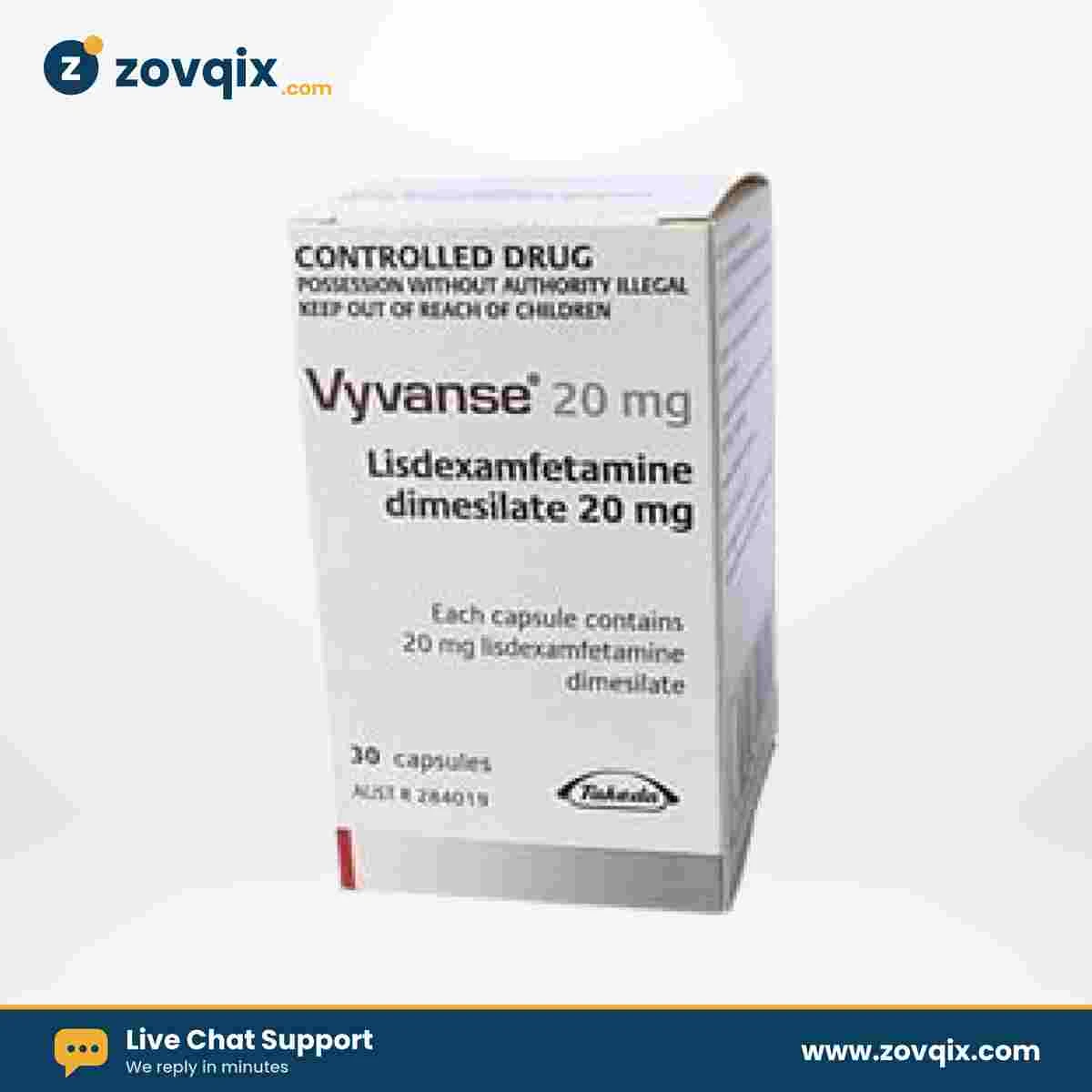
Vyvanse 20mg contains lisdexamfetamine dimesylate, a prescription central nervous system stimulant used as part of a professionally supervised treatment plan for Attention Deficit Hyperactivity Disorder (ADHD). It is designed to provide an extended period of medicine activity after administration.
The 20mg strength is one of several available strengths. The exact dosage form, packaging and approved uses may differ between countries, so the product label should always be checked before use.
Vyvanse is a prodrug, which means the body converts lisdexamfetamine into its active form, dextroamphetamine. This medicine affects certain brain chemicals involved in attention, focus and impulse control.
When prescribed for ADHD, treatment aims to help manage symptoms such as difficulty maintaining attention, excessive activity and impulsive behaviour. Individual responses can vary, and treatment should be monitored by a qualified healthcare professional.
Brand Name: Vyvanse
Strength: 20mg
Active Ingredient: Lisdexamfetamine dimesylate
Medicine Category: Central nervous system stimulant
Common Dosage Form: Oral capsule; chewable presentations may also exist in some markets
Administration: Oral
Main Approved Use: ADHD
Prescription Status: Prescription-only medicine in many markets
Packaging: Check the supplied manufacturer's pack for exact quantity and presentation
Vyvanse may be prescribed as part of a comprehensive ADHD management programme. Depending on local approval, lisdexamfetamine products may also be authorised for moderate to severe binge eating disorder in adults.
For ADHD, treatment is intended to support the management of attention-related symptoms and impulsive behaviour. It is not a substitute for appropriate clinical assessment, behavioural support or other recommended care.
Vyvanse is not approved as a weight-loss medicine.
Vyvanse is a potent prescription stimulant and requires careful medical supervision.
Possible side effects include:
Reduced appetite
Difficulty sleeping
Dry mouth
Headache
Nausea or stomach discomfort
Anxiety or feeling restless
Irritability
Increased heart rate
Increased blood pressure
Weight loss
Seek medical attention if serious or unusual symptoms develop, including chest pain, fainting, severe mood changes or signs of an allergic reaction.
Tell your healthcare professional about existing medical conditions and all medicines or supplements you take. Particular care is required for people with heart problems, high blood pressure, certain mental health conditions, a history of seizures or a history of substance misuse.
Vyvanse should not be taken with monoamine oxidase inhibitor (MAOI) medicines or within the restricted period after stopping them. Certain other medicines can also interact with it.
The medicine has a recognised risk of misuse, abuse, dependence and addiction. Keep it securely stored and never share it with another person.
During pregnancy or breastfeeding, seek medical advice before using this medicine.
Use Vyvanse only according to the prescription and instructions supplied by the prescribing professional. Do not increase, reduce or change the dose independently. The 20mg strength does not automatically mean it is the appropriate starting or maintenance dose.
Keep the medicine in its original packaging, away from moisture, excessive heat and direct sunlight. Store it securely and out of the reach of children.
1. What is Vyvanse 20mg used for?
Vyvanse contains lisdexamfetamine and is prescribed primarily for ADHD as part of a supervised treatment programme.
2. What is the active ingredient in Vyvanse?
The active ingredient is lisdexamfetamine dimesylate.
3. Is Vyvanse 20mg a prescription medicine?
Yes. It is a prescription-controlled stimulant in many countries. Local prescription and supply requirements vary.
4. Can Vyvanse be used for weight loss?
Vyvanse is not indicated or recommended as a weight-loss medicine.
5. Can everyone use Vyvanse 20mg?
No. A healthcare professional must assess whether it is suitable, considering age, medical history, other medicines and potential risks.
6. Does Vyvanse have side effects?
Yes. Possible effects include reduced appetite, insomnia, dry mouth, headache, anxiety and increased heart rate or blood pressure.

No review given yet!
 Fast Delivery
 Secure Payments
 Easy Returns
 Friendly Support



You need to login to view this feature

This address will be removed from this list
 english